
What Your Choice of Formal Shoe Quietly Tells Everyone in the Room
People say they do not judge a book by its cover, but most of us notice the shoes. Before you have said a word, before anyone has asked your name or learned your job title, your footwear has already introduced you. It has made a quiet but remarkably clear statement about who you are, how you think, and how much attention you give to the details that others might miss.
This is not about snobbery. It is about the simple reality that clothing communicates, and formal footwear communicates more precisely than almost anything else a man wears. The shoes you choose are the finishing touch that either pulls everything together or quietly undermines it. Understanding what they say about you is one of those genuinely useful pieces of knowledge that pays dividends every time you get dressed.
First Impressions Are Built on Small Signals
Human beings are remarkably good at reading small signals, often without realising they are doing it.
A scuffed heel, a worn-down sole, a shoe that has lost its structure, these things register subconsciously even in people who have never given a moment of conscious thought to footwear. On the other side, a well-maintained, well-chosen formal shoe creates a feeling of trust and quiet competence that is surprisingly hard to put into words but very easy to feel.
Think about the last time you met someone who was dressed smartly but whose shoes looked neglected. Something felt slightly off, even if you could not name it immediately. That instinct is real. Shoes are one of the few parts of an outfit that age visibly and honestly, which is exactly why they carry so much weight in how others read you.
The Closed Lace and What It Communicates
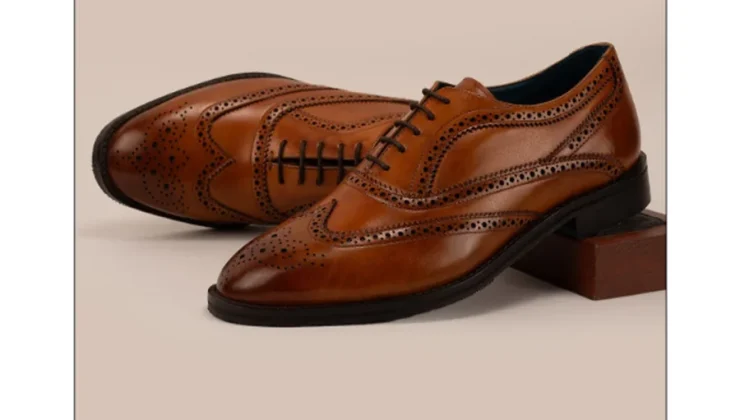
Few shoes command the kind of quiet authority that a well-made pair of oxford shoes brings to a formal setting. The closed lacing system, the clean and unbroken lines from toe to heel, the low profile that keeps everything tidy and precise, all of it adds up to a shoe that signals serious intent without making any noise about it.
A man who reaches for oxford shoes when the occasion calls for formality is telling the room something without saying a word. He has thought about what is appropriate. He understands structure and proportion. He is not trying to stand out through novelty but through quality and correctness. In professional settings especially, this reads as exactly the kind of grounded confidence that tends to be trusted.
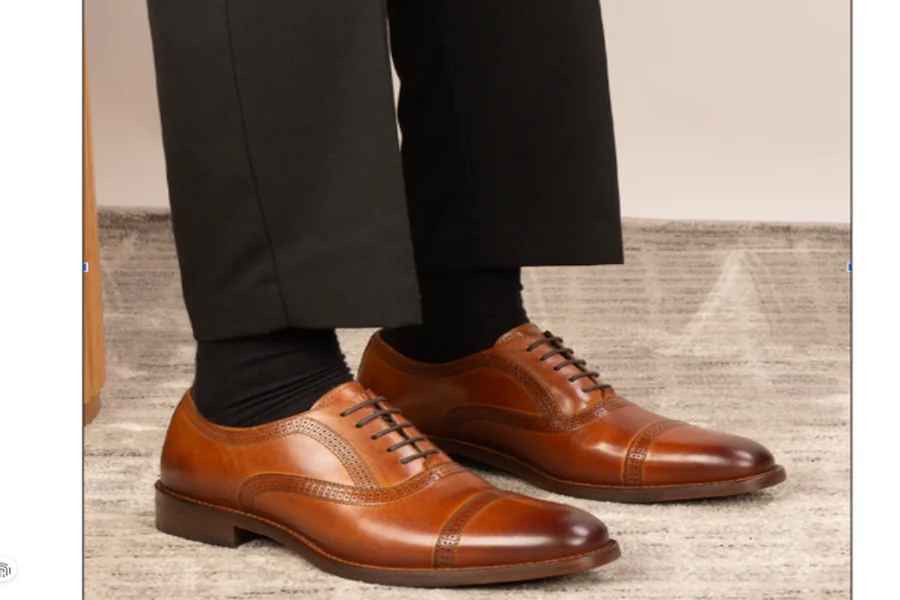
The cap-toe variation sits at the most formal end of the spectrum and suits business formal and black tie occasions with equal ease. The plain-toe version is slightly more relaxed but still firmly in classic territory. A brogue variation, with its decorative perforations along the seams, edges toward smart casual and brings a little personality without abandoning the clean structure that makes the silhouette so dependable.
Reading the Room Beyond the Office
The way a pair of smart shoes lands in a social setting is slightly different to how they read at work. At a wedding, a well-chosen pair signals that you have taken the occasion seriously and wanted to do it justice. At a dinner, they suggest you have a sense of occasion that goes beyond the bare minimum. These are not trivial things. People respond to effort, even when they cannot explain why.
There is also something worth saying about the confidence that comes from wearing smart shoes you genuinely like and feel comfortable in. Footwear has a way of affecting posture, pace, and general energy. A shoe that fits well and looks right tends to make you stand a little taller and move with a little more ease, and people pick up on that without ever being able to articulate why.
The Colour Conversation You Did Not Know You Were Having
Beyond silhouette, colour carries its own set of signals. Black in a formal context communicates authority and precision. It pairs with grey, navy, and charcoal with an ease that is almost impossible to get wrong, and it has a long-standing association with professionalism that remains entirely relevant today.
Brown, particularly in richer shades like tan, cognac, or dark chestnut, brings a warmer and slightly more individual energy to formal dressing. It suggests someone with a personal take on classic style rather than someone simply following a default. In creative industries or more relaxed professional environments, a brown formal shoe often lands better than black because it feels considered rather than automatic.
The finish matters too. A high-shine polish reads as traditional and meticulous. A more natural or burnished finish feels contemporary while remaining entirely smart. Neither is wrong, but they speak to different personalities and different occasions, and being aware of that gives you a real advantage.
Why How a Shoe Is Made Changes Everything
There is a point at which two shoes can look nearly identical from a distance but feel completely different up close, and people with any eye for quality will always notice. The difference comes down to construction. Full-grain leather uppers, a properly thought-through last, Goodyear welted soles, these are the details that separate a shoe that looks good on a shelf from one that looks good on your foot for a decade.
Oswin Hyde is a British brand that takes this kind of construction seriously, producing classically made formal footwear that holds its shape and develops a genuine character over years of wear. When a shoe is built to last, the story it tells about you only gets better with time.
A shoe that has been properly maintained and wears in beautifully communicates something that a cheap, brand-new pair simply cannot. It says you invest wisely, you look after what you own, and you think beyond the short term. That is a message worth sending in any room.
Dressing for the Room You Want to Be In
One of the most practical ways to approach formal footwear is to think about the room you are walking into and what it expects. A job interview at a law firm has different expectations to a meeting at a creative agency, and your shoes should reflect that awareness. Matching the register of your footwear to the occasion is not about dressing for other people. It is about showing that you have read the situation correctly.
Getting this right consistently is a skill, and like most skills it becomes easier with a bit of genuine curiosity about how style actually works. Start with a clean, well-made pair in black or brown and build from there. Add a good Derby for more relaxed formal occasions. Consider a refined loafer for evenings and social settings. Over time you build a small collection that covers most situations without any scrambling.
Conclusion
Your choice of formal shoe is never just a practical decision. It is a form of communication, and it speaks before you do. A well-chosen pair of oxford shoes signals precision and a genuine respect for the occasion. A carefully selected pair of smart shoes in the right setting signals awareness, effort, and the kind of quiet self-assurance that people find easy to trust.
None of this requires a vast wardrobe or an obsessive interest in fashion. It requires a little knowledge, a little thought, and the willingness to invest properly in a few pieces that will serve you well for years. The reward is a quiet but unmistakable authority that you carry into every room, without saying a single word.