
Understanding the Immensity of 100 Acres: Real-World Comparisons That Make Sense
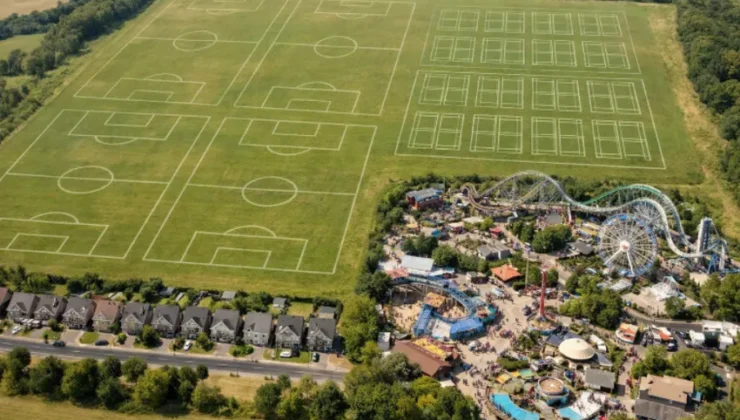
Grasping the concept of 100 acres can feel nearly impossible without relatable measurements. When you hear “100 acres,” what does that space truly look like? This article breaks down how impressive such a plot of land is by comparing it to everyday locations and items you already know. For more insight on the scale, discover The Vastness Of 100 Acres to further expand your appreciation of large land areas.
Whether you’re dreaming about rural property, plotting out development projects, or simply curious, these comparisons will give you a vivid mental image of what 100 acres really means. The visual context is a game-changer when planning or considering the purchase of acreage. Determining the true scale of such a large expanse can help guide practical decisions in real estate and land development.
This kind of comparison can even spark inspiration if you’re considering new uses for vacant plots or wondering what sort of projects can fit within such a significant space. From agricultural dreams to creative developments, understanding context is crucial. If exploring land opportunities is your goal, resources like https://www.webuylandquick.com/ can help you evaluate what’s possible with substantial acreage.
Football Fields
Perhaps one of the most vivid and relatable comparisons is the American football field. A full-size National Football League (NFL) field, including end zones, measures about 57,600 square feet, or roughly 1.32 acres. Based on this, 100 acres would hold about 75.75 football fields side by side. If you can picture standing at one end zone and seeing nearly 76 fields lined up, the enormity of the land starts to come alive. According to experts at Land.com, football fields are often used as the gold standard for comparing large parcels in the United States.
Tennis Courts
If you are more familiar with sports like tennis, consider that a standard singles tennis court covers about 2,800 square feet, or about 0.064 acres. Simple math shows that you could place around 1,500 tennis courts in 100 acres. Imagining a field filled entirely with tennis courts makes the sheer size feel tangible and highlights just how much can be accomplished in this space.
Mall of America
The Mall of America in Bloomington, Minnesota, is one of the largest malls in North America, spanning nearly 96 acres. This commercial giant features over 500 stores, a full-scale amusement park, and a wide variety of eateries and attractions. If you are trying to picture 100 acres, think of the entire Mall of America plus a little extra. Using commercial landmarks like this helps make the comparison less abstract.
Residential Homes
The average American home covers approximately 2,400 square feet, which is about 0.055 acres. If you take 100 acres, you could fit around 1,800 mid-sized homes there. This is roughly the foundation for a high-density suburban development, offering a glimpse of how many families could live on such a property. Maybe it is a new neighborhood, a planned community, or a private residential estate with room for gardens, parks, and recreational facilities.
Theme Parks
Theme parks offer another useful benchmark. Disneyland Park in Anaheim, California, for example, stands on 85 acres. This means a 100-acre property is a bit bigger than one of the most famous theme parks in the world. Visualizing rides, walkways, water features, and green spaces packed into such an area underscores the vast creative and economic potential of 100 acres.
Walking Distance
To put one final perspective on it, consider the perimeter of a square 100-acre parcel. Each side would be about 2,090 feet, so walking the full perimeter would cover roughly 1.58 miles. This is longer than many urban walking loops and demonstrates just how much physical space 100 acres commands. For anyone considering farming, hosting large events, or simply enjoying solitude, that perimeter becomes very meaningful. Additional walking comparisons can be found at The New York Times guide to exercise.
Agricultural Uses
One of the most traditional uses of a large tract like 100 acres is agriculture. The space allows for the cultivation of row crops, orchards, vineyards, or the raising of livestock in substantial numbers. For example, 100 acres could accommodate multiple barns, greenhouses, grazing areas, irrigation systems, or even a small integrated farm operation. This acreage can easily sustain hundreds of fruit trees, think of a commercial apple or peach orchard, and leave enough open land for fields of vegetables or grains. For those interested in sustainability or organic farming, such a property offers room for crop rotation, biodiversity, and even agritourism ventures. Having 100 acres means enough land to be both self-sustaining and potentially profitable in agricultural terms.
Environmental Impact
Owning or managing 100 acres doesn’t just provide space for profit or recreation; it can also have significant environmental benefits. Preserving this much land as natural forest, prairie, or wetland offers a safe haven for wildlife, helps prevent erosion, and contributes to local and regional biodiversity. Landowners might establish hiking paths, wildlife corridors, or conservation easements to protect habitats and native species. In many areas, 100 acres of forest can offset a considerable amount of carbon annually, contributing positively to the fight against climate change. For those passionate about ecology or conservation, such an expanse of land is an opportunity to leave a lasting mark on the landscape for future generations.
Business Applications
The commercial potential of 100 acres is significant. Beyond residential and agricultural projects, this much land could house a vineyard and winery, large-scale event venues, solar farms, or even a private golf course. Many corporate retreats, camps, or resorts operate on parcels of this size, blending built infrastructure with natural beauty. Some visionaries invest in 100 acres to develop adventure parks, equestrian facilities, or to subdivide and sell smaller lots. As rural economies shift and land values rise, there’s virtually no limit to the business ideas that 100 acres can accommodate. Proper planning and vision can turn open land into a gathering place for thousands or a destination for travelers from around the world.
In summary, 100 acres is a remarkable size with real-world parallels that bring it to life. It is the equivalent of nearly 76 football fields, about 1,500 tennis courts, the footprint of the Mall of America, or even a bustling residential community. Understanding these comparisons makes it easier to visualize the uses and opportunities that come with owning such a large plot of land, whether for personal dreams or commercial ventures. And by considering agricultural, environmental, and business aspects, you can truly appreciate the scale and scope a 100-acre parcel presents. Whether your goals are practical, creative, or ecological, this amount of land yields nearly unlimited possibilities for development, stewardship, and innovation.