
Why Agencies Are Investing in Law Enforcement Virtual Reality Training Systems
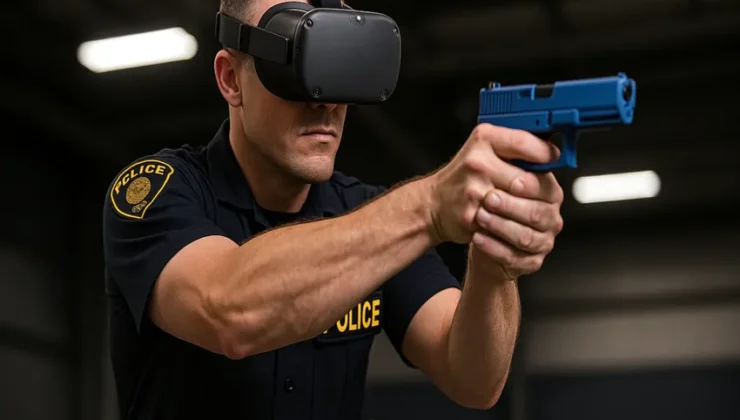
Police training has always evolved alongside the challenges officers face. As communities grow, technology advances and public expectations change, law enforcement agencies are continually looking for ways to improve how officers prepare for real-world situations. A law enforcement virtual reality training system is becoming an increasingly important part of that evolution, giving officers the opportunity to practise realistic scenarios in immersive environments before facing similar situations in the field. While classroom learning and live practical exercises remain fundamental, many organisations now view virtual reality as a valuable addition that strengthens overall officer development.
Preparing Officers for Complex Situations
Modern policing involves responding to an enormous variety of incidents.
An officer may deal with neighbourhood disputes, vulnerable individuals, road traffic collisions, public disorder or high-risk tactical situations, sometimes within the same shift. Preparing officers for this level of variety presents an ongoing challenge for training departments.
Virtual reality allows instructors to recreate many different operational environments without needing multiple physical locations or large numbers of role players. Officers experience changing circumstances that require observation, communication and sound judgement rather than simply following predetermined procedures.
This variety helps build confidence while reinforcing the importance of adapting to each individual situation.
More Opportunities to Practise
Practical experience remains one of the most effective ways to develop professional judgement.
Traditional scenario-based exercises often require significant planning, dedicated facilities and numerous instructors, which can limit how frequently they are delivered. Virtual reality makes it possible to provide additional practice sessions with considerably less logistical preparation.
Officers can repeat scenarios, revisit difficult situations and apply lessons learned immediately, allowing skills to develop through regular repetition rather than occasional large-scale exercises.
Greater access to practical training often leads to greater confidence when similar incidents occur in operational policing.
Consistency Across Different Training Groups
One advantage of immersive technology is its ability to deliver consistent learning experiences.
When different officers complete the same virtual scenario, instructors are better able to compare decision-making, communication and tactical responses under similar conditions. Although scenarios can be adjusted to meet specific learning objectives, the underlying environment remains controlled and repeatable.
This consistency helps training departments evaluate performance more fairly while maintaining common standards across recruits, experienced officers and specialist teams.
Supporting Better Decision-Making
Many policing situations develop rapidly and require officers to process multiple sources of information simultaneously.
Environmental conditions, public behaviour, officer safety and legal responsibilities all influence the decisions that must be made within moments. Virtual reality encourages participants to assess these factors continuously rather than reacting automatically.
Because scenarios evolve according to the officer’s actions, participants learn to think critically while remaining aware that every decision may influence what happens next.
Over time, this repeated exposure helps strengthen judgement under pressure.
Making Training More Flexible
Operational policing places constant demands on staffing and resources.
Training programmes must often be scheduled around shift patterns, operational commitments and instructor availability. Virtual reality systems provide greater flexibility by allowing agencies to deliver structured training without organising large-scale practical exercises every time.
Scenarios can be updated, expanded or modified to reflect emerging challenges, revised procedures or local operational priorities.
This flexibility allows agencies to keep training current while making better use of available resources.
Encouraging Reflection and Improvement
One of the most valuable aspects of virtual reality training occurs after the scenario has ended.
Participants and instructors review the incident together, discussing communication, decision-making and tactical choices in detail. Rather than simply identifying mistakes, these conversations encourage officers to understand why particular actions produced specific outcomes.
Because scenarios can be repeated immediately, officers have the opportunity to apply this feedback while the experience remains fresh in their minds.
This cycle of practice, reflection and improvement supports continuous professional development throughout an officer’s career.
Preparing for Incidents That Are Difficult to Recreate
Certain operational situations occur too rarely—or involve too much risk—to be practised regularly using conventional exercises.
Virtual reality allows agencies to expose officers to these incidents within a safe and controlled environment. Participants gain valuable experience responding to challenging circumstances while instructors retain complete control over the scenario and its progression.
Although virtual training cannot replicate every aspect of operational policing, it provides meaningful opportunities to rehearse responses that may otherwise receive limited practical training.
Technology Supporting Better Policing
Investing in new training technology is not simply about adopting modern equipment. It is about providing officers with additional opportunities to develop the judgement, communication and confidence required for effective policing.
A law enforcement virtual reality training system supports these objectives by creating immersive learning environments where officers can practise realistic scenarios repeatedly, receive immediate feedback and strengthen critical decision-making skills. As agencies continue looking for ways to improve both training quality and operational readiness, virtual reality is becoming an increasingly valuable tool that complements traditional instruction while helping officers prepare for the complex demands of modern policing.