
Why Business Websites Are Becoming Operational Tools, Not Just Digital Brochures
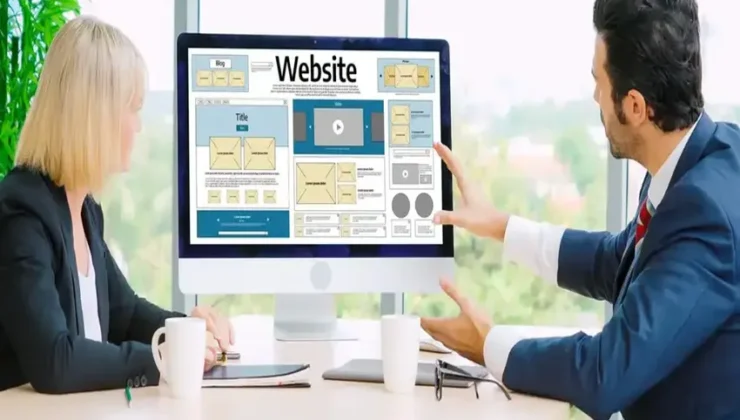
For many years, the typical business website had a fairly simple job. It introduced the company, explained its services, displayed contact information, and perhaps included a form for visitors who wanted to get in touch.
That model is changing quickly.
Customers increasingly expect to do something when they visit a business website. They want to book an appointment, reserve a vehicle, place an order, make a payment, check availability, compare products, or receive confirmation without having to call the business first.
As a result, the line between a website and business software is becoming less clear.
A modern website can still be the public face of a company, but it is increasingly becoming part of the infrastructure used to run the company as well.
From Online Brochure to Customer Interface
The original business website was largely a publishing system.
A company created pages containing text, photographs, contact information, and links. Visitors consumed that information and then continued the relationship through another channel, often by telephone, email, or an in-person visit.
Today, the website itself can become the first stage of the transaction.
A restaurant customer may want to reserve a table. A consultant’s client may want to schedule a meeting. A rental customer wants to find an available vehicle. An online shopper expects to select a product, pay for it, and receive an order confirmation.
The website therefore has to communicate with systems that understand more than pages and paragraphs.
It needs structured information about products, schedules, customers, reservations, payments, inventory, locations, and business rules.
Structured Business Data Changes What a Website Can Do
Consider the difference between writing about a service and representing it as structured data.
A traditional website might contain a page saying that a business offers consultations every weekday.
An operational website can understand that a consultation is a service with a duration, price, available staff member, calendar, and booking status.
The same principle applies across many industries.
- A product can have variants, stock levels, prices, and orders.
- A rental vehicle can have availability, a location, a reservation schedule, and pricing rules.
- A restaurant item can belong to a menu and participate in an ordering workflow.
- An appointment can have a service, time slot, customer, and status.
Once business information becomes structured rather than simply written onto a page, the website can begin responding to customer actions dynamically.
Online Booking Is a Good Example
Booking systems demonstrate this evolution particularly well.
A simple website might display a phone number and ask customers to call for availability.
A more integrated website can allow the visitor to select a date, see available options, choose a suitable service or resource, provide their details, and complete the booking.
Behind that seemingly simple customer experience, several systems may be working together.
The application may need to check availability, apply business rules, create a customer record, register the reservation, take a payment, and update the schedule.
The website is still involved, but it has become the user interface for a much larger workflow.
Payments Are Becoming Part of the Website Experience
A similar shift has happened with online payments.
Previously, a business website might tell customers which payment methods were accepted at a physical location.
Now the website can be directly involved in the transaction.
A customer might purchase a product, pay a booking deposit, complete a rental payment, or pay for a service without leaving the online experience.
This creates opportunities for businesses, but it also changes expectations.
Customers increasingly expect prices and charges to be clear before they reach the final step. They also expect confirmation that the transaction was successful.
That means payments should not simply be added as an isolated button. They work best when connected with the underlying order, reservation, or service workflow.
Customer Information Can Become More Useful
When websites operate separately from customer-management systems, information often becomes fragmented.
A contact form creates an email. A booking exists in another application. Payment information lives somewhere else. Marketing contacts may be stored in yet another platform.
Employees then spend time moving information between systems or trying to determine which record is current.
An operational website can reduce some of that duplication by connecting customer actions with customer records.
A person who submits an enquiry, makes a booking, or completes a purchase is no longer just an anonymous website visitor. Their interaction can become part of an ongoing customer relationship.
Automation Often Starts With Simple Repetitive Tasks
One of the biggest advantages of connecting websites with business workflows is automation.
This does not necessarily mean replacing people with complicated artificial intelligence systems.
Often the most useful automation is much simpler.
For example, software can automatically:
- send a booking confirmation
- record a new customer
- update availability after a reservation
- trigger a follow-up email
- notify staff about an important event
- record a conversion for later analysis
Each individual task may save only a few minutes. Across hundreds or thousands of customer interactions, however, those minutes become significant.
Different Industries Need Different Workflows
This evolution also explains why business websites are becoming more industry-specific.
A generic contact form behaves essentially the same for every company.
Operational workflows do not.
A rental company has to think about resources, availability, pickup locations, and rental periods.
A salon thinks in terms of services, employees, and appointment slots.
An ecommerce company works with products, inventory, orders, and returns.
A restaurant may need menus, ordering, and reservations.
The website design can share common technology across all of these businesses, but the processes behind the interface need to understand the business model.
This is also why platforms such as Webkio are combining website creation with operational features instead of treating the website as an isolated set of pages.
The broader technology trend is toward connecting what customers see with what the business has to do after the customer takes action.
No-Code Tools Are Lowering the Barrier
Historically, creating this kind of integrated system often required custom software development.
A company might hire one team to build the website, another provider for ecommerce or booking software, and several additional services for analytics, email marketing, payments, or customer management.
Integrating those tools could become a project in itself.
No-code and low-code platforms are changing the economics of this approach.
Instead of programming every workflow from the beginning, businesses can increasingly configure systems around existing modules and structured data.
This does not eliminate the need for software engineering behind the platform. In fact, the underlying software may be considerably more complex.
The difference is that much of that complexity is hidden from the business owner.
Analytics Become More Meaningful When They Track Outcomes
Traditional website analytics often focus on page views, sessions, traffic sources, and time spent on the site.
Those metrics can be useful, but businesses ultimately care about outcomes.
Did the visitor make a reservation?
Did they purchase something?
Did they book an appointment?
Did they become a qualified lead?
When the website is connected with the operational workflow, analytics can move closer to those questions.
Instead of measuring only how many people visited a page, the company can examine the journey from visit to action.
That can help reveal problems that traffic numbers alone cannot show.
For example, strong traffic combined with very few completed bookings may indicate problems with availability, pricing clarity, checkout complexity, trust, or the mobile experience.
The Website Is Becoming a Business Interface
None of this means that traditional website qualities are becoming less important.
Good design still matters. Pages should load quickly. Navigation should be clear. Content should be readable. The website should work well on mobile devices and be accessible to as many users as possible.
What is changing is what sits behind that interface.
The website is increasingly becoming a place where customers interact directly with business processes.
It can connect marketing with sales, customer acquisition with customer management, and public information with operational data.
What This Means for Businesses
When choosing website technology, businesses may therefore need to ask different questions than they did a decade ago.
Instead of asking only, “Can I create the pages I want?”, it may be useful to ask:
- What actions should customers be able to complete online?
- What happens inside the business after those actions?
- Can the website and operational workflow share the same information?
- Which repetitive tasks could be automated?
- Can the business measure meaningful outcomes rather than traffic alone?
The answers will differ dramatically between industries, but the underlying principle is similar.
A useful business website should not create more administrative work than it removes.
Final Thoughts
The business website is gradually evolving from a digital brochure into an active interface between customers and company operations.
Bookings, payments, products, schedules, customer records, marketing, and analytics are becoming more closely connected with the public website.
This transition is being accelerated by no-code technology and more industry-specific software, making capabilities that once required custom development accessible to a wider range of businesses.
The next generation of business websites will still need to look good and communicate clearly. But their value will increasingly be measured by something more important: what they help customers and businesses actually accomplish.
About Publizia
Publizia helps businesses, agencies, and SEO professionals build stronger online authority through quality guest posts, editorial backlinks, and digital PR placements. Buyers can explore a diverse network of publishing websites, compare opportunities based on niche, metrics, traffic, pricing, and other requirements, and choose placements that match their SEO strategy. Publizia makes link building more organized, transparent, and accessible while helping brands earn valuable exposure and strengthen their search presence.