
Why Proper Ground Preparation Is the Key to Lasting Paving and Driveways
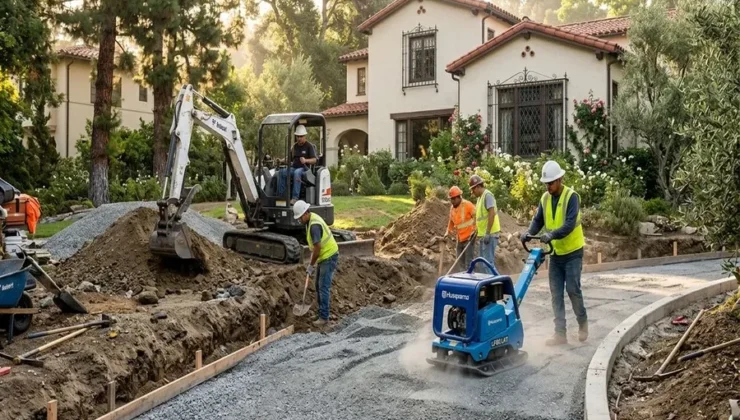
It’s always disappointing to see a new driveway crack within a year, or a paved patio develop dips, wobbly pavers and weeds sprouting through gaps. Homeowners often blame the materials, the weather or the tradie who laid it. But in many cases, the real problem lies beneath the surface, in ground that was never properly prepared.
Paving and driveways are only as strong as the base they sit on. Pavers, concrete and asphalt are designed to spread loads, but they rely on stable, well-compacted ground to support them. Getting the base right involves excavation, the right materials and thorough compaction, which is why compaction equipment hire is such a common part of landscaping and paving projects.
What happens beneath the surface
Soil isn’t a uniform, solid material. It’s full of air pockets, organic matter and moisture. When loads such as cars, foot traffic or garden furniture press down on poorly prepared ground, the soil compresses unevenly. That’s when you see sinking, cracking and movement.
Different soils behave differently, too. Clay soils can swell when wet and shrink when dry, causing paving to heave or settle. Sandy soils may drain well but can shift if not properly confined. Organic topsoil decomposes over time, leaving voids. Removing unsuitable material and replacing it with a stable base course is often necessary.
Water is another enemy. Poor drainage allows water to sit beneath paving, softening the base and leading to failure. Freeze-thaw cycles are less of an issue in most of Australia, but heavy rain and reactive soils can cause similar problems.
Building a strong base, layer by layer
A typical paving or driveway project starts with excavation to the right depth, depending on the intended load. A pedestrian path needs less depth than a driveway that will carry cars, and a driveway for heavy vehicles needs more again.
The exposed subgrade should be compacted before any base material goes in. Then a sub-base of crushed rock, road base or a similar material is spread in layers, usually no more than a certain thickness at a time, with each layer compacted thoroughly before the next is added. Trying to compact a thick layer all at once leaves loose material deeper down.
For pavers, a bedding layer of sand or fine crushed material provides a smooth, even surface for laying. For concrete, formwork and reinforcement follow. Throughout, levels and falls must be checked to ensure water drains away from buildings and doesn’t pool on the surface.
Choosing the right compaction equipment
Compaction removes air pockets and increases the density of soil and base materials, making them far more stable. The right equipment depends on the size of the job and the material being compacted.
Plate compactors are common for smaller areas such as paths, patios and paver beds. They vibrate as they move, consolidating granular materials effectively. Reversible plate compactors offer more power and can move forwards and backwards, which is useful in tighter spaces.
Rammers, sometimes called jumping jacks, deliver a strong up-and-down impact and are well suited to cohesive soils and confined spaces such as trenches. Rollers are used for larger areas like driveways and car parks, providing even compaction across wide surfaces.
Moisture content matters. Materials that are too dry won’t compact properly, while those that are too wet can become unstable. A light spray of water can help granular materials reach the right consistency.
Getting it right the first time
Proper ground preparation takes time, and it’s tempting to cut corners when you’re eager to see the finished surface. But skipping steps almost always costs more in the long run. Repairing a failed driveway often means ripping it up and starting again.
If you’re tackling a DIY project, take the time to research the correct depths and materials for your intended use, hire suitable equipment and follow the manufacturer’s safety guidance. Wear hearing protection, safety boots and eye protection when operating compactors, and be mindful of vibration exposure on longer jobs.
For larger or more complex projects, or on sites with difficult soils, slopes or drainage issues, it’s worth getting professional advice. A well-built base is invisible once the job’s finished, but it’s the reason a good driveway or patio still looks great years later.